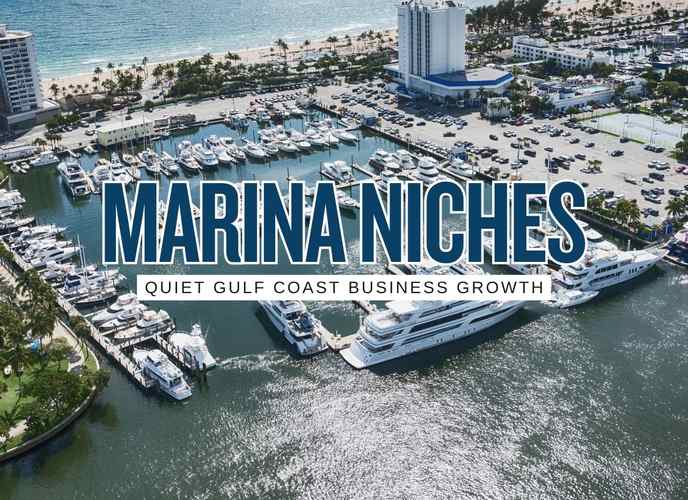
Marinas and boatyards are becoming more than places to park boats. Along the Gulf Coast, the stronger business model is shifting toward storage, service, storm planning, haul-outs, clubs, hospitality, and specialized marine trades that keep boaters active even when new boat sales are uneven.
The Quiet Shift Around Gulf Coast Marinas
The marina business used to be easy to describe from the outside: slips, fuel, launch ramps, and maybe a repair yard. That picture is now too small. A modern Gulf Coast marina can be a storage business, a service business, a hospitality business, a storm-preparation hub, a boat club base, a seafood and charter gateway, a real estate anchor, and a local employment engine all at once.
The most interesting growth is not always in new boat sales. In fact, a softer sales market can still support marina demand because existing boat owners continue spending money on storage, maintenance, repairs, electronics, insurance requirements, bottom jobs, detailing, hurricane hauling, trailer work, and convenience services. The boat may already be purchased, but the recurring spending continues.
Eight Gulf Coast Niches Growing Quietly
The strongest opportunities are not always flashy. Many are practical, recurring, and tied to the realities of Gulf Coast boating: heat, salt, storms, shallow water, fishing culture, insurance requirements, busy families, aging boats, and limited waterfront land.
- ❶ Dry stack and covered storage: Gulf Coast boaters increasingly want protection from sun, storms, theft, and maintenance headaches. Dry stack facilities also help marinas increase revenue per acre when waterfront land is expensive or limited.
- ❷ Hurricane haul-out and storm storage: Boat owners want a plan before named storms enter the Gulf. Marinas and boatyards that offer clear haul-out procedures, priority lists, storm contracts, and secure storage can turn risk into recurring demand.
- ❸ Mobile marine technicians: Outboard service, electrical troubleshooting, pumps, batteries, steering, trailer wiring, and electronics create a steady service market. Skilled tech access is often more valuable than another amenity.
- ❹ Boat clubs and access-based boating: Many customers still want to boat, fish, and entertain without owning, storing, insuring, cleaning, and repairing a vessel. Clubs can bring new customers onto the water and generate traffic for marinas.
- ❺ Detailing, ceramic coating, and corrosion control: Salt air, UV exposure, humidity, and brackish water create constant demand for cleaning, waxing, polishing, coating, and corrosion prevention.
- ❻ Marine electronics and connectivity: Radar, sonar, GPS, trolling motors, lithium batteries, chargers, cameras, security systems, and onboard internet are becoming service lines of their own.
- ❼ Trailer and launch support: Trailer brakes, bearings, tires, lights, bunks, winches, ramps, and launch assistance are overlooked but essential in smaller boating communities.
- ❽ Marina hospitality add-ons: Restaurants, coffee, bait, ice, ship stores, fish-cleaning stations, events, transient dockage, and family amenities can make the marina a destination instead of a parking lot.
Growth Signals by Business Line
Marina owners, contractors, investors, and service providers should look at the market by revenue lane. Each lane has different margins, labor needs, risks, and local competition.
| Business Line | Growth Signal | Local Opportunity |
|---|---|---|
| Dry Storage | Demand is supported by limited waterfront land, storm concerns, convenience, and boat owners trying to reduce exposure. | Dry stack construction, rack systems, forklift operators, building contractors, access control, valet launch staffing, washdown services. |
| Repair Yard | Existing boats need recurring maintenance even when new sales slow. Aging systems, electronics, engines, and trailers create steady work. | Mobile mechanics, fiberglass repair, bottom paint, outboard service, pumps, batteries, wiring, steering, and upholstery. |
| Storm Services | Gulf Coast boaters need hurricane plans, haul-outs, extra lines, storage, documentation, and post-storm inspections. | Storm contracts, haul-out priority programs, photography records, emergency labor, shrink wrap, blocking, cradles, and cleanup. |
| Boat Clubs | Access-based boating appeals to people who want time on the water without storage, cleaning, maintenance, and ownership friction. | Fleet cleaning, fuel management, training captains, dock staff, reservation support, maintenance contracts, and member events. |
| Hospitality | Marinas with food, drinks, ice, bait, events, and family-friendly amenities can capture more spend from each visit. | Cafes, food trucks, tackle shops, private events, guide partnerships, local apparel, and weekend programming. |
| Dock Infrastructure | Storm resilience, aging facilities, floating docks, power pedestals, lighting, security, and utility upgrades are ongoing needs. | Marine construction, electrical contractors, dock repair, pile work, cameras, Wi-Fi, access gates, and lighting upgrades. |
Dry Stack Storage Is Becoming a Prime Gulf Coast Asset
Dry stack storage is one of the clearest marina trends because it solves several problems at once. It protects boats from constant water exposure, reduces bottom growth, limits some storm and theft risks, creates a convenience service for owners, and allows operators to generate more income from limited land.
The Gulf Coast makes this especially attractive because many boaters face intense sun, salt air, sudden storms, barnacle growth, tropical weather planning, and crowded waterfront access. A well-run dry stack is not just a warehouse. It is a customer-service operation built around speed, scheduling, launch reliability, washdown, fuel, security, and maintenance coordination.
| Dry Stack Feature | Owner Benefit | Operator Benefit |
|---|---|---|
| Covered or enclosed storage | Less sun exposure, fewer weather headaches, cleaner boat condition. | Premium monthly pricing and stronger retention. |
| Valet launch service | Less hassle, easier family boating, faster weekend use. | Creates service differentiation and recurring customer interaction. |
| Washdown and flush service | Reduced maintenance burden after saltwater use. | Add-on revenue and better boat condition inside the facility. |
| Service center integration | Maintenance can happen where the boat already sits. | Captures repair revenue that might otherwise leave the property. |
| Storm-prep priority | Clearer plan before hurricane warnings. | Creates loyalty and reduces chaotic last-minute operations. |
Boatyards Are Becoming Service Bottlenecks
For many Gulf Coast boat owners, the hardest part of boating is not buying a boat. It is getting qualified service when something breaks. Outboard diagnostics, electrical issues, corrosion, fuel problems, steering, trailer brakes, bilge pumps, batteries, electronics, fiberglass damage, and bottom paint all require skilled labor.
This creates a strong business case for specialized service providers. A marina with limited dock space can still increase revenue by improving service scheduling, adding mobile technicians, leasing small shop spaces, or partnering with trusted specialists. A boatyard that communicates clearly, quotes quickly, and finishes jobs on schedule can become the preferred facility even without luxury amenities.
| Service Niche | Demand Driver | Business Model |
|---|---|---|
| Outboard diagnostics | Modern engines require trained technicians and proper tools. | Hourly service, seasonal packages, marina service agreements. |
| Marine electrical | Boats now carry more electronics, chargers, batteries, pumps, lights, and accessories. | Mobile troubleshooting, rewiring, panel upgrades, battery systems. |
| Fiberglass and gelcoat | Dock rash, storm damage, trailering accidents, and cosmetic repairs. | Project pricing, insurance repair work, yard partnerships. |
| Bottom paint and hull care | Warm water and long seasons increase fouling pressure. | Haul-out packages, recurring maintenance, winter or offseason specials. |
| Trailer repair | Many Gulf Coast boaters trailer to ramps, camps, fishing spots, and tournaments. | Brake, bearing, tire, bunk, winch, and lighting service near marinas and ramps. |
Boat Clubs Are Changing the Customer Base
Boat clubs and access-based boating are important because they bring people into boating who may not want ownership responsibilities. A customer can want fishing trips, family sandbar days, sunset cruises, and occasional watersports without wanting storage fees, insurance, cleaning, maintenance, and repairs.
For marinas, boat clubs can increase dock activity, fuel sales, restaurant traffic, training demand, maintenance work, and brand exposure. They can also introduce new boaters who later become owners, renters, charter customers, or long-term marina members.
Storm Resilience Is Now a Revenue Strategy
Storm planning used to be treated mostly as an emergency procedure. Along the Gulf Coast, it is now part of the business model. Boat owners want clarity before hurricane season: haul-out priority, dry storage options, tie-down rules, contact procedures, photos, insurance documentation, and post-storm inspection help.
Marinas and boatyards that formalize storm services can reduce chaos and create a service customers are willing to pay for. This is especially true for absentee owners, second-home owners, charter operators, and busy families who cannot always reach the marina quickly when a storm forecast changes.
- ❶ Annual storm-plan enrollment: Customers pay for priority communication, pre-storm instructions, and preferred service scheduling.
- ❷ Haul-out priority lists: Yards can manage capacity earlier instead of dealing with a rush when every owner calls at once.
- ❸ Photo documentation packages: Before-and-after images help owners, insurers, and service teams understand condition and damage.
- ❹ Post-storm inspection rounds: Quick checks for lines, bilges, power, dock damage, debris, and water intrusion can become a premium service.
- ❺ Temporary storage partnerships: Marinas can coordinate with inland yards, warehouses, dry-stack providers, and transport companies.
Marina Hospitality Is Getting More Serious
The marina that only stores boats may miss customer spending happening around the visit. Boaters need ice, drinks, fuel, bait, tackle, food, sunscreen, apparel, fish-cleaning space, showers, laundry, parking, shaded waiting areas, and weekend entertainment. Families also value places where non-boaters can feel comfortable while others launch or return.
This is especially relevant in tourism-heavy Gulf Coast towns. A marina connected to food, events, transient dockage, charter fishing, boat clubs, and local retail can become a destination. The strongest facilities make it easy for visitors to spend money before and after the boat ride.
| Amenity | Revenue Potential | Best Setting |
|---|---|---|
| Ship store | Ice, drinks, sunscreen, hats, rope, oil, snacks, bait, and branded apparel. | Busy launch marinas, transient docks, fishing-focused facilities. |
| Food and beverage | Restaurant, coffee counter, food truck rotation, breakfast biscuits, after-fishing meals. | Tourism corridors, charter docks, waterfront destinations. |
| Fish-cleaning station | Customer retention, convenience, sponsorship, and sanitation control. | Fishing marinas, charter hubs, tournament locations. |
| Events | Music nights, fishing seminars, boat demos, safety classes, vendor days. | Marinas with parking, patio space, or restaurant partners. |
| Transient dockage | Short-term visitors spending on fuel, food, retail, and local services. | Destinations near restaurants, downtowns, beaches, and cruising routes. |
Marina Niche Revenue Estimator
This simple planning tool helps marina owners, boatyards, and service providers estimate monthly revenue from add-on services such as washdowns, detailing, storm-plan memberships, trailer checks, or service coordination.
This estimate shows how small add-on services can become meaningful revenue when attached to an existing customer base.
Tip: Test one add-on at a time. Washdown packages, storm-plan memberships, trailer checks, and seasonal service inspections are easier to launch than a major new facility project.
Small Businesses That Can Plug Into Marina Growth
The marina economy creates openings for businesses that do not own a marina. Many of the best opportunities are specialized service businesses that can work with multiple marinas, boat clubs, yards, and waterfront communities.
| Business Idea | Customer Need | Strong Gulf Coast Angle |
|---|---|---|
| Mobile marine electrical | Batteries, chargers, pumps, lights, trolling motors, electronics, corrosion issues. | Boats sit in heat, salt, humidity, and storm exposure for long periods. |
| Storm-prep service | Lines, fenders, haul-out coordination, photos, insurance documentation, post-storm checks. | Absentee owners and busy families need help before storms arrive. |
| Boat detailing and coatings | Oxidation, mildew, salt residue, UV damage, resale prep, charter presentation. | Long boating seasons create recurring cleaning demand. |
| Trailer repair near ramps | Bearings, brakes, tires, lights, bunks, winches, registration prep. | Many Gulf Coast boaters trailer between camps, launches, and fishing spots. |
| Charter support services | Cleaning, laundry, provisioning, bait, ice, maintenance coordination, customer check-in. | Fishing and eco-tourism operators need reliable turnaround help. |
| Dock and marina maintenance | Decking, cleats, bumpers, lighting, power pedestals, gates, water lines, cameras. | Storms and salt air make facility upkeep a constant need. |
Pressure Points Owners Should Watch
The opportunity is real, but marina and boatyard businesses have pressure points that should not be ignored. Waterfront property is expensive. Insurance can be difficult. Storm exposure affects capital planning. Skilled marine labor is limited. Environmental rules matter. Customers expect faster communication than many older yards are used to providing.
- ❶ Technician shortages: Service demand can outgrow available skilled labor. Training, apprenticeships, and retention matter as much as marketing.
- ❷ Insurance and storm exposure: Marinas and boatyards must price around coastal risk, liability, docks, fuel, customer property, and business interruption.
- ❸ Permit friction: Dock work, dredging, shoreline work, fuel systems, and expansion projects can take time and professional guidance.
- ❹ Customer communication gaps: Boaters get frustrated when yards do not provide updates. Better scheduling software and text updates can become a competitive advantage.
- ❺ Capacity imbalance: A marina may have enough slips but not enough parking, forklift capacity, fuel flow, service bays, or dockhands during peak periods.
- ❻ Rising customer expectations: Boaters compare marinas to hotels, clubs, apps, and resorts. Convenience is becoming part of the product.
Local Strategy for Marina Operators
The strongest marina operators are not only selling space. They are selling confidence. Customers want to know their boat is accessible, protected, maintained, clean, secure, and easier to use. That means the operator’s biggest opportunity may be packaging services that already happen informally.
Investor and Entrepreneur Signals
For investors, marinas are attractive because waterfront property is limited and slip or storage demand can be durable even when boat sales fluctuate. For entrepreneurs, the better starting point may be less capital-intensive: service niches that support marinas instead of owning the marina itself.
The Gulf Coast has several built-in advantages. Boating culture is strong. Fishing is deeply local. Tourism drives transient demand. Warm weather stretches the season. Storm risk creates planning needs. Large waterfront communities support services. Many boat owners want convenience because time on the water is valuable.
Bottom Line for Gulf Coast Business News
Marina and boatyard growth is easy to overlook because much of it happens in service bays, storage barns, dock offices, and weekend routines. But the business signals are strong. Boat owners may be cautious about buying new boats, yet they still need places to store, launch, repair, clean, insure, and enjoy the boats already in use.
For Gulf Coast entrepreneurs, the opportunity is not limited to owning waterfront property. The quieter growth is in the support economy around marinas: technicians, storage, storm planning, detailing, hospitality, boat clubs, dock repair, electronics, trailer service, and customer convenience. Those niches may become some of the most practical small-business openings in coastal communities.