Downtown Comebacks Moving From Vision Boards to Construction Zones
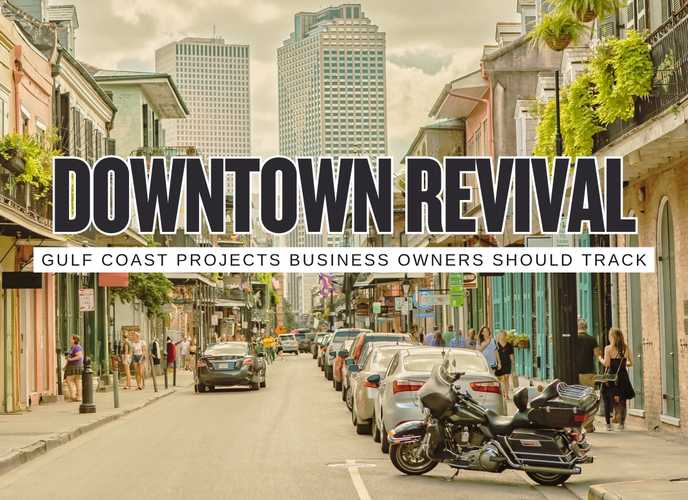
Across the Gulf Coast, downtown districts are being rebuilt around walkability, housing, entertainment, waterfront access, and mixed-use investment. For local businesses, the signals are practical: more people, more projects, more disruption, and more chances to get in early.
The next wave of downtown growth is more layered than a single new building.
Downtown redevelopment used to be judged mainly by skyline projects or one large public building. The current Gulf Coast cycle looks different. Cities are trying to link streets, parks, hotels, event venues, apartments, waterfronts, offices, small business corridors, and cultural anchors into districts that work beyond weekday lunch traffic.
That makes these projects especially important for business owners. A streetscape rebuild can help a restaurant but hurt it during construction. A new arena can bring event-night sales but change parking demand. A hotel can help retailers, coffee shops, florists, transportation companies, caterers, and cleaning services. A downtown housing push can support pharmacies, gyms, dry cleaners, salons, bars, medical offices, and convenience retail.
River District gains a stronger office and hotel spine
New Orleans’ River District is moving through an important phase as Shell’s new Gulf headquarters takes shape near the convention center area. The larger district is also being watched for the proposed Omni hotel, housing plans, Louisiana Music and Heritage Experience, and possible reuse of the Market Street Power Plant as an entertainment venue.
The business story is not limited to one corporate office. A working River District could create a new edge between downtown, the convention center, the riverfront, hospitality, culture, and nearby entertainment. That can affect restaurants, transportation providers, event companies, retailers, office services, cleaning contractors, security firms, and owners of underused buildings nearby.
Plan Baton Rouge III puts the riverfront back in play
Baton Rouge has unveiled a new downtown blueprint focused on reconnecting the city to the Mississippi River, adding housing, improving mobility, supporting small businesses, and creating stronger public spaces. The plan envisions more than $1.5 billion in early investments and aims to grow the downtown residential base and job count over time.
For business owners, the important point is the mix. Downtown Baton Rouge has long had strong government, office, legal, event, and riverfront assets, but the next stage depends on more residents, more walkable connections, more consistent programming, and more reasons to stay after work hours.
Regions Arena and St. Louis Street reshape the downtown event corridor
Mobile has two downtown moves worth tracking together. The city’s Regions Arena project carries an overall project budget of about $300 million, including demolition, construction, road work, and utility support for future development. Nearby, the St. Louis Street project is rebuilding 17 blocks with landscaping, lighting, ADA crossings, utility upgrades, drainage improvements, and safer street design.
That combination can change both event traffic and everyday business conditions. A new arena may expand downtown’s entertainment calendar, while a rebuilt business corridor can improve the experience for restaurants, offices, apartments, service firms, nightlife, and destination retail.
Palafox upgrades and Maritime Park plans add pressure to the waterfront core
Downtown Pensacola has a major streetscape improvement already in motion through the New Palafox project, which includes stormwater work, ADA curb ramps, widened sidewalks, improved intersections, and mid-block crossings. The corridor is one of the city’s most recognizable downtown business streets.
Pensacola is also being watched for the proposed Maritime Park mixed-use development involving residential units and a hotel near the downtown waterfront. Together, these moves could strengthen the connection between shopping, dining, events, tourism, housing, and waterfront activity.
Channel South brings mixed-use investment to the waterfront corridor
Gulfport’s Channel South project is a $105 million mixed-use development planned for a downtown site near 25th Avenue and West Beach Boulevard. The project is designed to bring residential, hospitality, retail, and public-space uses into a walkable waterfront destination.
For Mississippi Coast business owners, this is one of the clearest downtown redevelopment projects to watch because it combines visitor traffic with local daily use. A successful mix could support restaurants, small retailers, hospitality vendors, event services, real estate activity, and coastal lifestyle businesses.
Lakefront activation aims to turn underused waterfront into a business engine
Lake Charles continues to position its downtown and lakefront as a larger economic development opportunity. Plans highlighted through the regional Just Imagine SWLA effort point to projects such as Port Wonder, Lake Area Adventures, restaurant activity, and a more continuous pedestrian-friendly waterfront edge.
The opportunity is straightforward: a more active waterfront can turn short visits into longer stays. That helps restaurants, attractions, outfitters, hotels, retail shops, event companies, and service businesses that depend on consistent visitor movement.
Downtown street investment targets safer walks and stronger retail blocks
Galveston’s Downtown Livable Communities Project is focused on transforming downtown streets from 20th to 26th and from Harborside Drive to Church Street. The plan includes sidewalk repairs and widening, ADA improvements, pedestrian safety upgrades, and green infrastructure features such as rain gardens.
For a historic retail and visitor district, street quality matters. Better sidewalks, safer crossings, and a more comfortable pedestrian environment can help boutiques, restaurants, galleries, bars, coffee shops, hotels, and tour operators capture more walking traffic.
Historic Gas Plant proposals could redefine a major downtown site
St. Petersburg’s Historic Gas Plant District remains one of the Gulf Coast’s most closely watched redevelopment decisions. The city has been reviewing shortlisted proposals for the site tied to Tropicana Field, with public input, community benefits discussions, and negotiation steps shaping the selection process.
This is a large downtown land decision with major implications for housing, public space, retail, innovation, sports-adjacent uses, community repair, and long-term tax base. For business owners, the area could affect customer flow, office demand, tourism, construction work, local hiring, and investment patterns across downtown St. Pete.
Strong downtown projects share one trait
The most promising redevelopment stories are not simply big. They create repeat reasons to visit. Business owners should look for projects that add residents, improve walking routes, extend evening activity, bring events, support small tenants, and connect to nearby streets instead of functioning as isolated destinations.
| Business Category | Redevelopment Signal | Smart Move |
|---|---|---|
| Restaurants and Cafes | More residents, hotels, arena events, riverfront parks, and pedestrian improvements. | Plan weekday lunch, event-night, brunch, and grab-and-go offers around changing traffic patterns. |
| Retail Shops | Streetscape upgrades, hotel projects, mixed-use housing, and tourism corridors. | Improve windows, wayfinding, local product displays, and online pickup options before foot traffic grows. |
| Contractors and Trades | Public infrastructure, hotel work, adaptive reuse, apartments, arena districts, and waterfront construction. | Build relationships with developers, property managers, architects, and local procurement contacts early. |
| Professional Services | Office anchors, housing growth, small-business leasing, and relocation activity. | Target landlords, tenants, restaurants, contractors, and new residents with local service packages. |
| Property Owners | Walkability improvements, new anchors, public-space upgrades, and stronger downtown programming. | Review signage, facade condition, lighting, lease terms, parking access, and tenant mix before demand shifts. |
Downtown Opportunity Readiness Score
Use this quick checklist to gauge whether a business is ready to benefit from nearby downtown redevelopment activity.
This tool is for planning and editorial use. A higher score means the business is better prepared to turn downtown change into customer activity rather than simply reacting after construction begins.
The practical takeaway for local companies
Downtown redevelopment rewards businesses that prepare early. The owners who benefit most are usually the ones who track projects before opening day, adapt offers to new traffic patterns, improve visibility, keep online information current, and stay close to local decision makers. A new arena, hotel, park, apartment project, streetscape, or waterfront district can bring opportunity, but the gain is rarely automatic. It has to be converted into visits, calls, reservations, contracts, and repeat customers.