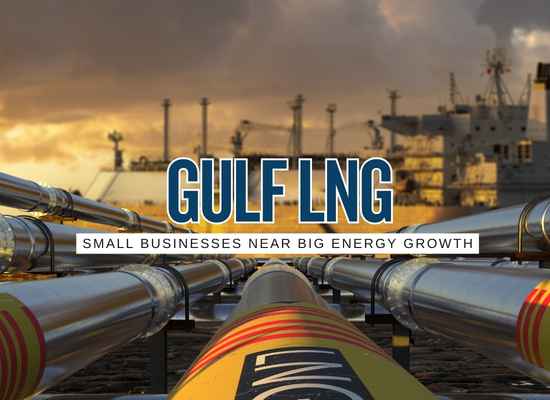
The Gulf Coast LNG buildout is usually told as a story about billion-dollar terminals, global energy buyers, and giant engineering firms. But the quieter opportunity may be sitting closer to home. Every new LNG train, pipeline tie-in, ship call, worker camp, laydown yard, inspection schedule, and storm-prep plan creates demand for local companies that are not energy giants at all.
The LNG boom is not just a terminal story. It is a supplier story, a workforce story, a logistics story, a housing story, a storm-readiness story, and a local services story. The companies that spot the smaller gaps early may have a better shot than the ones waiting for a direct contract with the biggest names on the gate sign.
Industrial services demand: Construction, commissioning, routine maintenance, insulation, coatings, fabrication, scaffolding, crane support, and specialty trades are all pulled into the LNG orbit.
Labor pressure: Southwest Louisiana and coastal Texas are competing for many of the same welders, electricians, pipefitters, instrumentation technicians, drivers, safety staff, and supervisors.
Local retail lift: Restaurants, housing operators, laundries, convenience stores, medical clinics, mechanics, and mobile service providers can see demand spikes without ever touching LNG equipment.
Resilience spending: Storm prep, flood response, backup power, drainage work, security, traffic control, and emergency logistics are no longer seasonal afterthoughts near major energy corridors.
Gulf Coast LNG Is Turning Into a Local Services Multiplier
The Gulf Coast already sits at the center of U.S. LNG exports, and the next phase is not limited to new liquefaction trains. LNG growth also pulls on pipelines, port services, marine traffic, construction yards, road corridors, training programs, housing markets, inspection providers, emergency response teams, and small contractors that can pass strict site requirements.
For local businesses, the key is to stop thinking only in terms of “selling to an LNG plant.” Many of the best opportunities sit one or two steps away from the terminal. A welding shop may support a subcontractor. A cleaning company may serve worker housing. A local clinic may support drug testing and occupational health. A catering firm may feed crews. A sign company may provide safety signage, wayfinding, hard-hat decals, barricade panels, and multilingual notices. A small logistics company may move parts, tools, pumps, hoses, filters, portable offices, or replacement gear.
Local business angle: The biggest energy companies often work through prime contractors, EPC firms, staffing firms, facility managers, marine operators, security vendors, trucking companies, and maintenance providers. Smaller businesses should map the supplier chain around the project, not just the project owner.
12 Local Business Niches Beyond the Big Energy Companies
➊ Industrial Workforce Housing Support
Large LNG projects can strain nearby housing markets long before full operations begin. Workers need short-term rentals, RV parks, extended-stay rooms, furnished apartments, housekeeping, linen service, parking, shuttle access, laundry pickup, reliable Wi-Fi, and after-hours maintenance.
The strongest local plays are not always new hotels. In smaller Gulf communities, practical workforce housing services can include property management for owners, furnished-unit conversion, temporary bunkhouse support, cleaning contracts, appliance repair, pest control, and parking-lot lighting upgrades.
Extended stay RV parks Laundry Property management➋ Safety Signage, Labels, Barricades, and Wayfinding
LNG sites use extensive signage for safety, security, traffic, restricted areas, PPE reminders, emergency exits, pipe identification, laydown yards, parking zones, temporary construction routes, and contractor check-in points. The opportunity extends into nearby roads, warehouses, training centers, crew housing, and subcontractor yards.
A local sign company can move faster than an out-of-town supplier when a contractor needs replacements, storm-damaged signage, reflective materials, vehicle decals, QR-coded inspection tags, or temporary directional signs for shifting work zones.
Safety signs Reflective decals Pipe markers Work-zone signs➌ Mobile Fleet Repair and On-Site Equipment Service
LNG construction and maintenance corridors depend on trucks, vans, pumps, light towers, compressors, generators, lifts, trailers, forklifts, crew buses, and small engines. Downtime hurts, especially when a subcontractor is on a tight schedule or a crew is working nights.
Mobile mechanics, tire service companies, diesel repair shops, hydraulic hose providers, generator technicians, and trailer repair firms can build strong repeat business by offering documented response times and site-ready safety procedures.
Diesel repair Tire service Hydraulic hoses Generators➍ Contractor Yard Services and Laydown Support
Every large industrial build creates a shadow network of yards, fenced lots, temporary offices, staging areas, storage containers, and equipment parking. These spaces need gravel, drainage, lighting, fencing, access control, cameras, portable restrooms, dumpsters, water service, signage, and routine maintenance.
Local landowners and service companies can package yard support instead of offering only raw space. A prepared lot with security lighting, stable access, heavy-vehicle turning room, stormwater planning, and fast setup can be more attractive than cheaper acreage with no infrastructure.
Laydown yards Fencing Lighting Drainage➎ Workforce Food, Catering, and Shift-Friendly Retail
LNG work does not always match normal breakfast, lunch, and dinner patterns. Crews may need early meals, late pickup, boxed lunches, hydration stations, coffee service, grab-and-go items, and reliable delivery to controlled access points.
Local restaurants, food trucks, convenience stores, and caterers can win by being practical rather than fancy. The best offering may be a dependable meal program, invoice billing, clear allergen labeling, and delivery windows that match shift changes.
Boxed meals Hydration Food trucks Shift meals➏ Occupational Health, Testing, and Rapid Clinic Access
Industrial employers and contractors need medical clearance, drug testing, respiratory fit testing, hearing tests, injury care, return-to-work documentation, and urgent clinic access. Local providers that understand industrial paperwork can become important support partners.
This niche rewards speed, documentation, and reliability. A clinic that can process workers quickly, communicate clearly with safety managers, and provide extended hours may stand out in a crowded labor environment.
Drug testing Fit testing Injury care Return-to-work➐ Specialized Cleaning, Laundry, and Contamination Control
Worker housing, offices, trailers, vehicles, meeting rooms, PPE storage areas, and industrial support spaces need frequent cleaning. Some environments also require controlled procedures for dust, residue, mud, standing water, mold risk, or post-storm cleanup.
Local cleaning firms can move upmarket by offering documented checklists, photo verification, secure key handling, high-traffic restroom service, laundry pickup, floor care, and emergency response after heavy weather.
Crew housing Trailer cleaning PPE laundry Post-storm cleanup➑ Marine and Small-Vessel Support Around LNG Traffic
LNG export growth increases activity around waterways, pilots, tug operations, crew movement, inspection schedules, security zones, bunkering support, launch services, and marine supply chains. Not every local marine company will work directly beside an LNG carrier, but many can serve the surrounding commercial traffic.
Opportunities may include crew transport, dockside supplies, marine electronics, safety gear, small-vessel repair, corrosion control, cleaning, inspection support, and emergency standby services.
Crew boats Marine repair Dockside supply Safety gear➒ Storm Prep, Flood Response, and Backup Power
LNG corridors sit in places that must plan around hurricanes, coastal flooding, heavy rain, road closures, power outages, and supply chain interruptions. That creates demand for backup generators, portable pumps, sandbags, flood barriers, temporary roofing, emergency lighting, fuel delivery, debris removal, drainage cleaning, and rapid property repair.
Local companies that already serve homeowners can create commercial packages for contractor yards, offices, retail sites, housing operators, and small industrial suppliers near LNG activity.
Generators Portable pumps Flood barriers Debris removal➓ Security, Access Control, and Camera Monitoring
The LNG economy creates more valuable equipment in more temporary locations. Contractor yards, storage lots, vehicles, offices, trailers, and housing sites need cameras, lighting, gate systems, mobile patrols, badge procedures, and theft deterrence.
Local security providers can differentiate with temporary camera towers, license plate capture, remote monitoring, solar-powered systems, lighting audits, and rapid installation for yards that may only be active for a few months.
Camera towers Gate control Mobile patrol Lighting audits⓫ Skilled Trade Training and Certification Support
Workforce strain creates opportunity for training providers, community colleges, private instructors, safety consultants, testing centers, and companies that help workers move from entry-level roles into higher-value industrial positions.
Training tied to welding, electrical, instrumentation, rigging, OSHA safety, confined space, heavy equipment, CDL, scaffold safety, and basic industrial readiness may benefit from the broader LNG and megaproject cycle.
Welding CDL Instrumentation Safety training⓬ Professional Services for Local Suppliers
Many small businesses near LNG activity are good at the work but weak on paperwork, compliance, bidding, insurance review, accounting, marketing, recruiting, websites, and vendor registration. That creates a secondary professional-services niche.
Local accountants, insurance agents, marketing firms, grant writers, HR consultants, bookkeepers, IT providers, and bid-support specialists can help smaller suppliers become easier to hire by larger contractors.
Vendor setup Insurance review Recruiting Bid supportOpportunity Map for Local Operators
| Business Type | Near-Term Demand Signal | Local Advantage | First Offer to Package |
|---|---|---|---|
| Sign companies | Changing work zones, safety needs, new yards, contractor routing | Fast replacement, local installation, weather-aware materials | Industrial safety signage bundle with reflective options |
| Restaurants and caterers | Large crew counts and irregular shift schedules | Local delivery, repeat menus, flexible pickup times | Boxed lunch and hydration program for crews |
| Mechanics and repair shops | Heavy use of trucks, trailers, light towers, pumps, generators | Response time and local parts knowledge | Mobile fleet repair retainer for subcontractors |
| Property owners | Worker housing, storage, parking, office trailers | Proximity to plants, ports, highways, and staging areas | Prepared laydown or workforce housing package |
| Clinics | Hiring waves, injury care, occupational screenings | Speed, documentation, and extended hours | Industrial onboarding health package |
| Cleaning and laundry firms | Housing turnover, office trailers, PPE support, storm cleanup | Flexible crews and repeat routes | Weekly workforce housing cleaning plan |
| Security providers | Equipment theft risk, yard access, temporary worksites | Local patrol coverage and fast install | Temporary camera and lighting package |
Supplier Readiness Checklist
The smaller companies most likely to benefit are not always the cheapest. They are the ones that are easy to vet, easy to schedule, easy to insure, and easy to trust. Before pitching LNG-adjacent contractors, local businesses should prepare a simple supplier packet.
- Insurance certificate: Keep updated proof of coverage ready to send.
- Safety record: Document basic safety procedures, training, and incident history.
- Service area map: Show response zones around Lake Charles, Cameron, Port Arthur, Corpus Christi, Plaquemines, or other target corridors.
- Response times: State realistic arrival windows for normal calls and emergency calls.
- After-hours policy: LNG-related work often runs outside a normal business day.
- Photo examples: Show completed work, equipment, crews, vehicles, or jobsite setups.
- Simple pricing structure: Make it easy for a purchasing manager to compare service levels.
- Vendor documents: W-9, business license, insurance, certifications, references, and safety documentation should be organized before outreach.
Best practical move: Build a one-page LNG corridor capability sheet. It should say who you serve, which locations you cover, available response times, safety credentials, insurance status, and three examples of problems you solve.
Local Business Fit Calculator
Use this simple scoring tool to estimate whether a local business is positioned for LNG-adjacent demand. It is not a financial forecast. It is a quick readiness check for owners deciding whether to pursue industrial and contractor-related work.
Local Niches With the Fastest Path to Revenue
Some LNG-adjacent niches require years of industrial credibility. Others can be approached faster by businesses that already serve commercial customers. For smaller local operators, the fastest paths usually have three traits: urgent need, low switching friction, and clear proof of service.
| Niche | Speed to Market | Barrier | Smart Entry Point |
|---|---|---|---|
| Safety signage and labels | Fast | Material specs and installation reliability | Offer jobsite signs, reflective decals, and rush replacement |
| Boxed meals and catering | Fast | Consistency and delivery timing | Start with contractor offices and housing sites |
| Mobile tire and fleet repair | Fast to moderate | After-hours staffing and parts inventory | Target subcontractors with trucks and trailers |
| Workforce housing services | Moderate | Property access, insurance, and management systems | Package furnished units, cleaning, parking, and maintenance |
| Security camera systems | Moderate | Equipment cost and monitoring capability | Start with temporary yards and equipment storage lots |
| Industrial training | Moderate to slower | Certification quality and employer trust | Partner with employers, schools, or staffing firms |
Outreach Targets Most Local Firms Overlook
A small business does not need to start at the top. The better first targets are often companies already selling into the LNG ecosystem.
- EPC subcontractors: Many need local help with services outside their core scope.
- Staffing agencies: Worker inflows create demand for housing, food, transportation, laundry, and health services.
- Equipment rental companies: They often need mechanics, fuel, cleaning, delivery help, signage, and site support.
- Industrial real estate owners: Yards, warehouses, and temporary offices need preparation and upkeep.
- Marine operators: Vessel activity creates demand for supplies, repair, safety gear, and crew support.
- Local governments and port districts: Traffic, drainage, signage, emergency planning, and public infrastructure support can create contract opportunities.
- Prime maintenance contractors: Routine work, shutdowns, and inspections can create recurring local service needs.
Owner takeaway: LNG growth creates a wide business ring around the plant itself. The best local strategy is to serve the people, vehicles, yards, housing, paperwork, repairs, weather risks, and logistics that surround the energy asset.
Practical First Moves for Gulf Coast Business Owners
For a local company, the right first move is usually small and specific. A broad “we do everything” pitch will get ignored. A focused offer that solves one recurring pain point has a better chance.
- Create one LNG-adjacent service package with a clear price range or service structure.
- Build a short capability sheet for industrial buyers and subcontractors.
- List service areas by corridor, parish, county, port, and nearby industrial zone.
- Add emergency response rules, after-hours contact, and realistic availability.
- Prepare insurance, W-9, safety documents, certifications, references, and photos before outreach.
- Contact subcontractors, staffing firms, equipment rental companies, property managers, and marine service firms before chasing terminal owners directly.
- Update website pages for LNG corridor searches, industrial services, contractor support, and specific Gulf Coast locations.
The Local Angle Gets Stronger as Projects Mature
Construction is only the first wave. As LNG facilities move from buildout to commissioning and operations, the spending mix changes. The market shifts from massive construction packages toward maintenance, inspections, site services, workforce support, safety updates, environmental support, security, parts movement, and storm readiness.
That means local businesses should avoid thinking of LNG as a short-lived construction boom only. Some opportunities will peak during construction. Others may become steady service categories for years if the company builds trust, stays compliant, and responds faster than distant competitors.