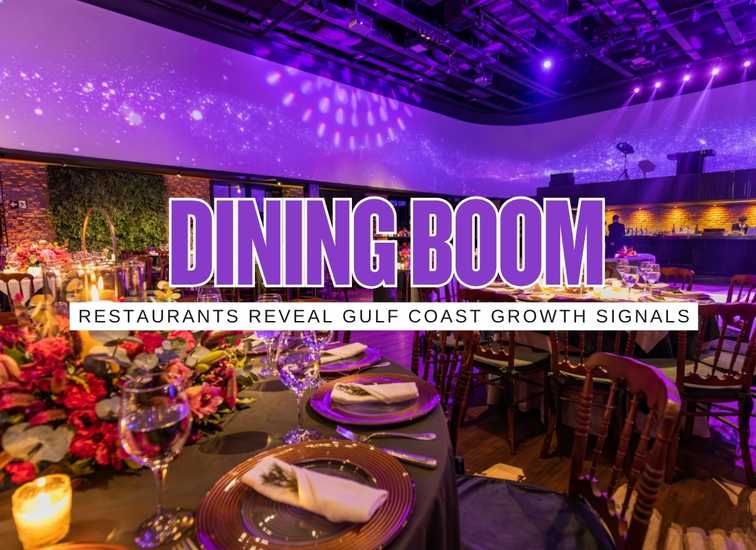
Restaurant openings are becoming a street-level business dashboard for the Gulf Coast. A new dining room can reveal where tourists are spending, where locals are still comfortable going out, which corridors are attracting investment, and which neighborhoods have enough momentum to support the next wave of retail, services, hotels, and entertainment.
For a local business blog, restaurant openings are more than food news. They are visible bets on rent, payroll, buildout costs, supplier networks, weekend traffic, and repeat customers.
The strongest signal is rarely one grand opening by itself. The stronger story comes from clusters: multiple restaurants opening near hotels, beaches, downtown blocks, medical districts, college corridors, or fast-growing suburbs.
Waterfront dining, hotel restaurants, seafood spots, and destination concepts point to visitor confidence.
Coffee, casual dining, brunch, takeout, and quick-service openings show daily household demand.
New leases and conversions show where landlords, lenders, and operators believe traffic is heading.
Restaurant openings are small stories with big business signals
A restaurant is one of the most public ways to watch business confidence form in real time. Before opening day, money has already moved through architecture, permitting, construction, signage, equipment, furniture, insurance, payroll setup, food distribution, cleaning, marketing, and hiring. After opening, the restaurant becomes a recurring buyer from dozens of local and regional vendors.
That makes restaurant activity useful for anyone trying to understand Gulf Coast growth. The opening itself gets the attention, but the surrounding pattern is the real story.
Smart local read: A new restaurant can signal disposable income, visitor volume, neighborhood confidence, franchise demand, redevelopment pressure, and the strength of nearby anchors such as hospitals, hotels, beaches, casinos, offices, schools, marinas, and entertainment districts.
Chef-led openings point to premium confidence
Higher check averages, destination dining, and neighborhood identityChef-driven restaurants are often the clearest sign that an operator believes a market can support more than convenience dining. These openings usually depend on stronger margins, distinctive menus, trained staff, premium buildouts, and customers willing to choose a dining experience instead of a quick meal.
Waterfront restaurants turn scenery into revenue
Bay views, beach traffic, boat access, and longer visitor staysAlong the Gulf Coast, waterfront dining can act like a mini tourism asset. A strong bayfront or beachfront restaurant gives visitors another reason to stay later, spend more, bring a group, book nearby lodging, or return outside the busiest beach hours.
Fast-casual growth validates traffic corridors
Franchise expansion, household growth, and daily convenience demandWhen fast-casual brands, drive-through restaurants, chicken chains, coffee brands, and quick-service concepts enter a corridor, they are usually following traffic counts, school patterns, rooftops, medical campuses, and commuter routes. These openings can be especially useful for spotting where suburban demand is moving before larger retail centers fill in.
Breakfast, coffee, and dessert show daily spending strength
Smaller tickets, repeat customers, and habit-driven demandCoffee shops, bakeries, dessert bars, brunch spots, smoothie shops, and quick breakfast concepts can reveal a different kind of strength than fine dining. These businesses depend on frequency. They need locals, office workers, students, families, and commuters to build habits around them.
Hotel restaurants reveal hospitality investment
Overnight demand, convention traffic, and mixed local-tourist diningA hotel restaurant can be a stronger economic signal than it first appears. If the concept is designed for both guests and locals, it can turn a hotel into a neighborhood asset instead of a building that only serves overnight visitors. That matters in cities and beach markets where restaurants help shape the full visitor experience.
Second locations show local operators gaining confidence
Brand traction, proven menus, and expansion-ready neighborhoodsA local restaurant opening its second or third location is often more telling than a first-time launch. It means the operator has already proven a concept, built supplier relationships, trained a team, and found enough brand loyalty to risk expansion.
Social-first restaurants can create instant district energy
Influencer traffic, visual menus, and first-week demand spikesSome new restaurants now open with a built-in online audience. A photogenic dining room, viral dessert, chef personality, waterfront deck, or highly shareable menu item can generate attention before the doors open. That can help a new concept create traffic faster than older restaurant launches that depended mostly on signage and word of mouth.
Gulf Coast restaurant signals by business category
| Opening pattern | Signal strength | Business reading | Groups that should watch |
|---|---|---|---|
| Waterfront or marina dining | Strong | Tourism, leisure spending, and destination traffic are supporting higher-experience concepts. | Hotels, marinas, charter operators, tourism groups, event venues, retailers. |
| Fast-casual and drive-through growth | Strong | Daily traffic, household growth, and convenience demand are strong enough for repeat transactions. | Landlords, developers, franchisees, brokers, lenders, shopping center owners. |
| Coffee, brunch, dessert, and bakery concepts | Watch | Routine local spending and neighborhood habit formation may be improving. | Small landlords, downtown groups, neighborhood retailers, local advertisers. |
| Chef-driven full-service openings | Selective | Premium dining confidence exists, but success depends heavily on execution and repeat local support. | Tourism groups, suppliers, private event businesses, hospitality recruiters. |
| Second or third location from a local brand | Strong | A proven operator is confident enough to expand payroll, leases, inventory, and management systems. | Equipment vendors, distributors, payroll firms, commercial real estate brokers. |
| Restaurant inside a hotel or mixed-use project | Watch | Food and beverage is being used to strengthen the property, not just fill space. | Hotel owners, developers, convention groups, local entertainment districts. |
The sharper read for local business owners
The best restaurant-opening stories are not just lists of names. The better business angle is pattern recognition. A new coffee shop near a hospital tells one story. A waterfront steak and seafood concept tells another. A chicken franchise on a highway corridor points to a different kind of demand. A second location from a local operator shows confidence that has already survived the first test.
For Gulf Coast communities, restaurants also help fill in the spaces between larger economic anchors. They make downtowns feel active after office hours. They give tourists reasons to leave the hotel. They support local vendors. They absorb older retail space. They create jobs for students, part-time workers, managers, cooks, bartenders, and service staff. They also generate visible momentum that other businesses can react to quickly.
Practical takeaway: One restaurant opening may be a food story. Three or four openings in the same corridor can become a real estate story. A mix of restaurants, hotels, entertainment, and retail can become an economic development story.
Restaurant Opening Signal Score
Use this simple tool to judge whether a new Gulf Coast restaurant opening is just a one-off announcement or a stronger business signal for the surrounding area.
Early signal
Check the boxes above to score the strength of the restaurant opening as a business indicator.
Restaurant openings are not perfect economic indicators, but they are useful because they are visible, local, and fast-moving. Across the Gulf Coast, the smartest read is not just which restaurant opened. It is the type of concept, the street it chose, the customer it is chasing, and the businesses likely to follow if the opening proves the corridor has momentum.